

Can the unpredictability of oil prices be mastered, or are we at the mercy of an ever-fluctuating commodity? The global oil markets have been a focal point amidst trade tensions and production shifts, leaving many to question what's next. With light sweet crude oil wavering near $67 and Brent just under $70, understanding oil price trends is crucial for anticipating future shifts. This article delves into expert insights and forward-looking predictions to offer clarity and strategy in an unpredictable landscape, highlighting the key factors driving these price movements.
Oil Price Forecast: Expert Insights and Future Predictions
Brent crude oil is projected to average $73.01 per barrel by 2025, according to major financial institutions like Goldman Sachs and JPMorgan. This expectation comes amidst a backdrop of consistent downgrades in forecasts, marking the seventh consecutive month of reduced predictions. Analysts rely on a mix of quantitative models and economic indicators to navigate the complexities of the crude oil forecast, accounting for variables such as geopolitical tensions and shifts in global demand.
When considering the reliability of these forecasts, it is crucial to acknowledge the inherent uncertainty in predicting oil prices. Factors such as unexpected geopolitical events, technological advancements in energy production, and rapid changes in global economic conditions can dramatically alter the landscape. Nonetheless, expert predictions are vital tools for stakeholders in the energy market, offering a framework to anticipate potential market movements and devise strategic plans accordingly.
-
Methodologies used in oil price forecasting:
-
Quantitative Modeling: Utilizing historical data and statistical techniques to predict future price movements.
-
Scenario Analysis: Examining various geopolitical and economic scenarios to assess potential impacts on oil prices.
-
Expert Judgement: Leveraging insights from industry experts and analysts to refine predictions.
-
Supply and Demand Analysis: Evaluating current and projected supply-demand dynamics to forecast price changes.
-
Technical Analysis: Analyzing chart patterns and price movements to identify trends and potential price points.
-
Economic Indicators: Monitoring macroeconomic indicators such as GDP growth, inflation rates, and interest rates to inform price forecasts.
-
The reliability of these forecasts hinges on the accuracy and timeliness of the data used, as well as the underlying assumptions in each methodology. As a result, while expert predictions provide a valuable guide, they must be interpreted with an understanding of the factors that could lead to deviations from expected outcomes.
Factors Influencing Future Oil Prices
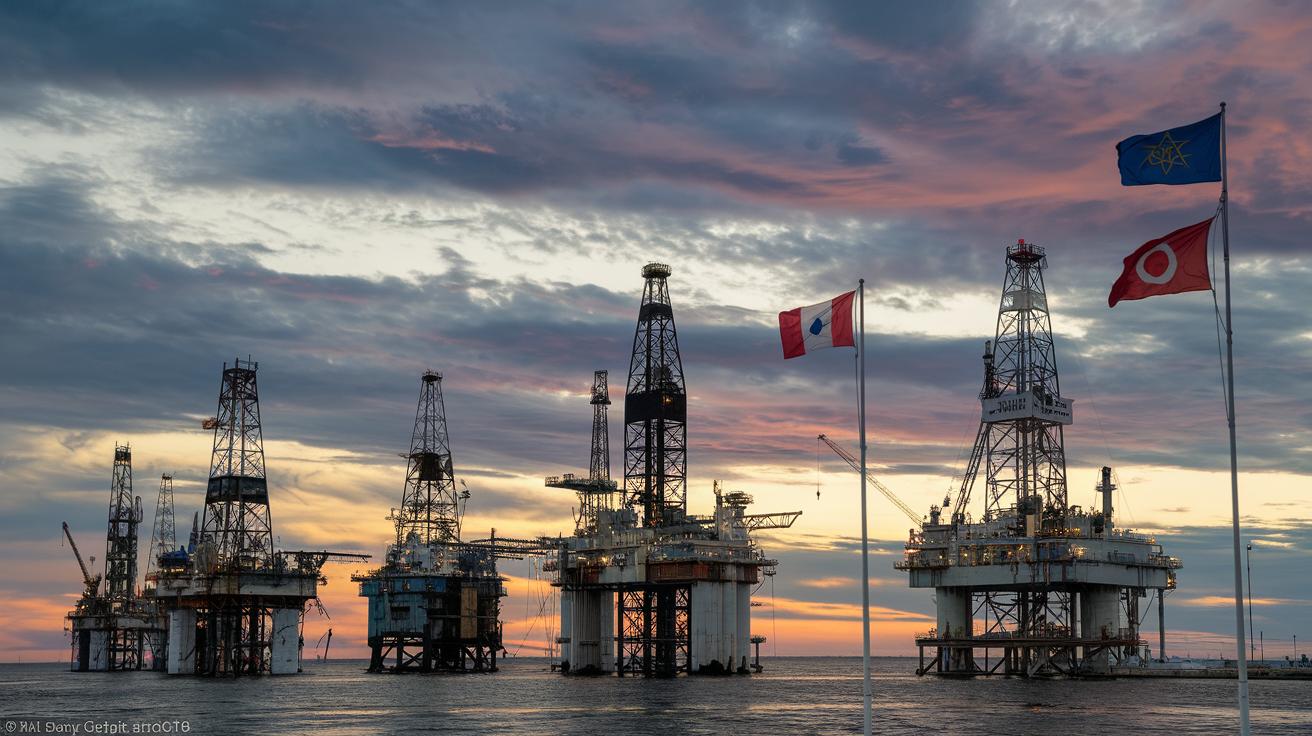
Geopolitical influences are critical in shaping future oil prices. A pertinent example is the ongoing conflict between Russia and Ukraine, where Russia's attacks on Ukraine's energy and gas infrastructure have heightened regional instability. This conflict underscores the potential for substantial disruptions in energy supply, leading to volatility in global oil markets. Additionally, U.S. geopolitical maneuvers, such as measures to curtail Iran's oil flows, further illustrate the significant impact political tensions can have on oil prices, often leading to reduced supply and increased market uncertainty.
Changes in production levels and associated policies also play a substantial role in determining oil price trajectories. Nigeria's decision to exceed its OPEC+ quota exemplifies how shifts in production levels can alter global supply dynamics. Such actions can lead to an oversupply, potentially driving prices downward. On the other hand, companies like Shell increasing their deepwater oil production offshore Malaysia indicate investment in expanding output, which can stabilize or increase supply, influencing price trends. These production adjustments, combined with domestic and international policy decisions, are pivotal in shaping the oil supply landscape.
Market and trade tensions contribute significantly to the current instability in oil prices. U.S. tariffs on imports and exports have led to increased market volatility, affecting oil price stability. Trade tensions, especially those involving major economies, can disrupt established trade routes and agreements, leading to fluctuations in demand and supply balances. These disruptions can result in price swings as markets react to the uncertainty created by such economic strife.
| Influencing Factor | Impact |
|—————————–|————————————————————————|
| Geopolitical Tensions | Heightened market volatility and potential supply disruptions |
| Production Level Changes | Altered global supply dynamics and potential price changes |
| U.S. Sanctions on Iran | Reduced supply leading to increased market uncertainty |
| Trade Tensions | Disrupted trade routes causing demand and supply imbalances |
| Shell's Production Increase | Stabilization or rise in supply affecting price trends |
Expert Predictions for Oil Price Forecast
Brent crude oil is anticipated to average approximately $73.01 per barrel by 2025, as projected by major financial institutions such as Goldman Sachs and JPMorgan. This projection reflects a trend of consistent downward revisions, marking the seventh consecutive month of reduced expectations. The adjustments in these forecasts are shaped by various factors, including geopolitical tensions, evolving supply-demand dynamics, and economic indicators. Experts employ a comprehensive approach, analyzing both short-term fluctuations and long-term market conditions to arrive at these projections. The interplay of these factors underscores the complexity and volatility inherent in predicting crude oil prices.
-
Methodologies used in oil price forecasting:
-
Quantitative Modeling: Employing historical data and statistical methods to estimate future price trends.
-
Scenario Analysis: Considering multiple geopolitical and economic scenarios to predict potential impacts on prices.
-
Expert Judgment: Incorporating insights and assessments from industry experts to refine predictions.
-
Supply and Demand Analysis: Evaluating current and projected trends in supply and demand to anticipate price shifts.
-
Technical Analysis: Using chart patterns and historical price movements to identify potential trends and price points.
-
Economic Indicators: Monitoring key economic variables like GDP growth, inflation, and interest rates to forecast price changes.
-
The reliability of these forecasts depends significantly on the data's accuracy and the robustness of the underlying methodologies. Predicting oil prices is inherently uncertain due to the potential for unforeseen geopolitical events, technological breakthroughs, and sudden shifts in global economic conditions. While these expert predictions provide valuable insights, they should be considered as part of a broader strategic framework, allowing stakeholders to adapt to unexpected changes in the oil markets.
The Impact of Global Supply and Demand on Oil Prices

Supply adjustments by key producers are pivotal in shaping oil prices. The United States and Nigeria are currently at the forefront of these changes. The U.S. is actively increasing its oil exports, notably to India, as a response to the sanctions on Russia, thereby altering traditional supply routes. Simultaneously, Nigeria has exceeded its OPEC+ production quota, contributing to an increased global supply. These production adjustments not only influence supply levels but also play a critical role in stabilizing or destabilizing market prices. For instance, an oversupply situation often leads to downward pressure on prices, whereas controlled production can help maintain price stability.
Demand patterns in major consuming countries are equally influential. India and China, two of the world's largest oil importers, have shown varying import volumes, which significantly impact global demand dynamics. China's recent 5% decrease in oil imports highlights potential shifts in economic activity or supply chain strategies. In contrast, India's ongoing interest in purchasing U.S. WTI oil underscores a steady demand, driven by its growing industrial and transportation needs. Furthermore, Indonesia's increasing gas demand, as LNG replaces diesel for power generation, indicates a broader trend towards alternative energy sources, which could alter oil consumption patterns globally.
The strategic implications of these supply-demand shifts are profound. Countries are increasingly leveraging their energy strategies to bolster economic resilience. Brazil, for example, plans to utilize its $3.5-billion oil fund to support economic growth, reflecting a strategic use of oil revenues amid fluctuating prices. These adjustments highlight the necessity for both producers and consumers to adapt quickly to global market changes, ensuring stability and sustainability in the energy sector.
- Countries with significant supply-demand shifts:
- United States: Increasing oil exports, particularly to India.
- Nigeria: Exceeding OPEC+ production quotas.
- China: Decrease in oil imports, affecting global demand.
- India: Steady demand for U.S. WTI oil.
Oil Investment Strategies Amid Price Fluctuations
Traditional investment strategies in the oil sector often revolve around long-term holdings in oil companies, futures contracts, and index funds that track oil price movements. These methods aim to capitalize on oil's cyclical nature, providing returns when prices recover from downturns. While such approaches can yield substantial profits during price surges, they are susceptible to significant risks associated with market volatility, geopolitical events, and regulatory changes that impact the oil financial markets.
-
Innovative investment strategies in oil markets:
-
Long-Short Equity Strategies: Balancing investments by taking long positions in undervalued stocks while shorting overvalued ones.
-
Asset Diversification: Spreading investments across different energy sectors, including renewables, to mitigate risks.
-
Commodity Trading Advisors (CTAs): Leveraging expert advice and automated trading systems to navigate market fluctuations.
-
Energy-focused Exchange-Traded Funds (ETFs): Investing in ETFs that focus on a range of energy commodities to capture market trends.
-
Green Investments: Allocating funds to sustainable and environmentally-friendly energy projects, aligning with global shifts toward renewable energy.
-
The risks and rewards of oil investments are intricately linked to market dynamics. Price speculation can lead to substantial gains, particularly during periods of unexpected price hikes. Conversely, the potential for stranded oil assets, projected to reach $2.3 trillion by 2040, underscores the necessity for cautious investment approaches. Investors must weigh the allure of high returns against the possibility of substantial losses, necessitating a strategic balance between risk management and opportunity maximization.
Final Words
Analyzing recent oil price movements reveals pressures from trade tensions and market supply. Understanding historical trends can guide future predictions. Looking ahead, geopolitical events and production changes significantly shape oil price forecasts. Analysts expect Brent crude oil to average $73.01 per barrel by 2025, using varied methodologies.
Fluctuations in global supply and demand from major players like India, China, and the U.S. present ongoing market challenges. Strategic investment approaches, such as those employed by Norway’s oil fund, illustrate adaptive strategies in uncertain times. Embracing these insights, stakeholders navigate the complexities of the oil market with informed optimism.
FAQ
What is the prediction for oil prices?
Brent crude oil prices are expected to average around $73.01 per barrel by 2025, according to surveys from financial institutions like Goldman Sachs and JPMorgan.
Will oil prices rise or fall?
Oil prices face upward pressure from geopolitical tensions and production changes, yet futures remain uncertain due to market volatility and trade tensions.
Is the oil price going up or down today?
Oil prices today show a sideways market trend, hovering around $67 for light sweet crude oil and slightly below $70 for Brent, reflecting recent market stability.
What will the oil price be in 2025?
Financial analysts predict that Brent crude oil prices will average approximately $73.01 per barrel by 2025, noting a general downgrade in expectations for future prices.


