

Why has gold reached a staggering $2,910.40 per ounce, and what does this value signify in the broader economic landscape? As global markets experience unprecedented fluctuations, this notable milestone in gold pricing draws attention from investors worldwide. Understanding the forces behind this price surge can provide critical insights into economic trends and investment strategies. This article delves into the intricacies of the current gold price per ounce, explaining its formation and real-time significance. By examining these elements, investors and curious onlookers can gain a deeper appreciation for gold as a stable asset in a volatile market.
Understanding Current Gold Price Per Ounce
As of March 07, 2025, the current gold price per ounce stands at $2,910.40. This figure holds significant importance for investors who closely monitor gold prices to identify optimal buying and selling points. The price per ounce is a critical indicator of market trends, influencing decisions on investments in physical gold, futures, and exchange-traded funds (ETFs). Gold prices are transacted primarily in U.S. Dollars, maintaining a consistent value worldwide when adjusted for currency exchange rates. The precision of these transactions and the transparency of real-time updates allow investors to respond swiftly to market fluctuations, enhancing their strategy efficacy.
| Date | Gold Price per Ounce |
|---|---|
| March 03, 2025 | $2,895.20 |
| March 04, 2025 | $2,900.10 |
| March 05, 2025 | $2,905.50 |
| March 06, 2025 | $2,910.00 |
| March 07, 2025 | $2,910.40 |
The gold price is updated hourly, reflecting dynamic changes driven by global trading activities. This continuous monitoring is essential, as it accounts for shifts in economic conditions, political developments, and market sentiment. The access to live gold price updates allows investors to track the value of their holdings and adjust their portfolios accordingly, ensuring they make informed decisions based on the most current data available. Maintaining a keen awareness of these updates is vital for those involved in gold trading and investment.
Factors Influencing Gold Price Fluctuations

Gold prices are inherently sensitive to a multitude of factors, with economic conditions and geopolitical events playing pivotal roles. Fluctuations can occur as investors react to changes in global economic stability, inflation rates, and currency values. Geopolitical tensions, such as the dynamics between world leaders like President Xi and President Putin, can lead to increased demand for gold as a safe-haven asset, driving prices up. Additionally, domestic economic policies, like the U.S.’s rising deficit spending, can also influence gold prices by impacting the strength of the dollar and investor confidence.
- Central Bank Activities: Central banks' buying and selling of gold reserves can directly impact supply and demand, influencing prices.
- Geopolitical Tensions: Conflicts or diplomatic strains increase gold's appeal as a secure investment, elevating its price.
- U.S. Deficit Spending: Expansion in government spending can weaken the dollar, prompting investors to turn to gold as an alternative store of value.
- Inflation Rates: Higher inflation erodes currency value, making gold more attractive as an inflation hedge.
- Currency Fluctuations: Variations in exchange rates, particularly of the U.S. dollar, have a significant effect on gold prices since gold is primarily traded in U.S. dollars.
- Interest Rates: Rising interest rates can decrease gold's allure as they often strengthen the dollar, while lower rates can enhance gold's attractiveness.
These factors collectively shape the gold market, with each element contributing to investor perceptions and market dynamics. For example, when geopolitical tensions rise, or economic instability looms, gold often garners heightened demand as a protective asset. Conversely, robust economic growth and stability can lead to decreased interest in gold as investors seek higher returns in riskier assets. Understanding these influences is crucial for investors looking to navigate the complexities of gold price movements.
Historical Trends and Future Projections for Gold Prices
Gold prices have a rich historical context, with data tracing back to 1915, adjusted for inflation using the Consumer Price Index (CPI). Over the decades, gold has reflected the economic and geopolitical shifts impacting global markets. During periods of economic instability, such as the Great Depression or the 2008 financial crisis, gold prices surged as investors sought refuge from volatile markets. Conversely, in times of economic prosperity and low inflation, gold prices have tended to stabilize or decline. This historical perspective is crucial for understanding gold's behavior and its perceived value as a hedge against economic uncertainty.
Gold Price Trends Over the Last Century
Looking to the future, experts have set various projections for gold prices. ANZ has forecasted a target of $2,700, indicating a potential decrease from the current price of $2,910.40. This projection takes into account factors such as potential economic recovery and adjustments in global monetary policy, which could affect gold's appeal. A strong support level around $2,400 suggests that, even with price fluctuations, gold is likely to maintain a baseline value, offering stability amidst market changes. These forecasts provide investors with benchmarks to gauge potential market directions and adjust strategies accordingly.
Future trends in gold prices will likely be influenced by several economic indicators. The interplay between inflation rates, interest rates, and geopolitical developments will continue to shape the market landscape. As central banks manage monetary policy in response to global economic conditions, gold's role as a safe-haven asset could see further reinforcement. Understanding these dynamics will be essential for investors aiming to capitalize on gold's potential for both growth and stability in a fluctuating economic environment.
Gold as a Safe-Haven Asset and Investment Strategy
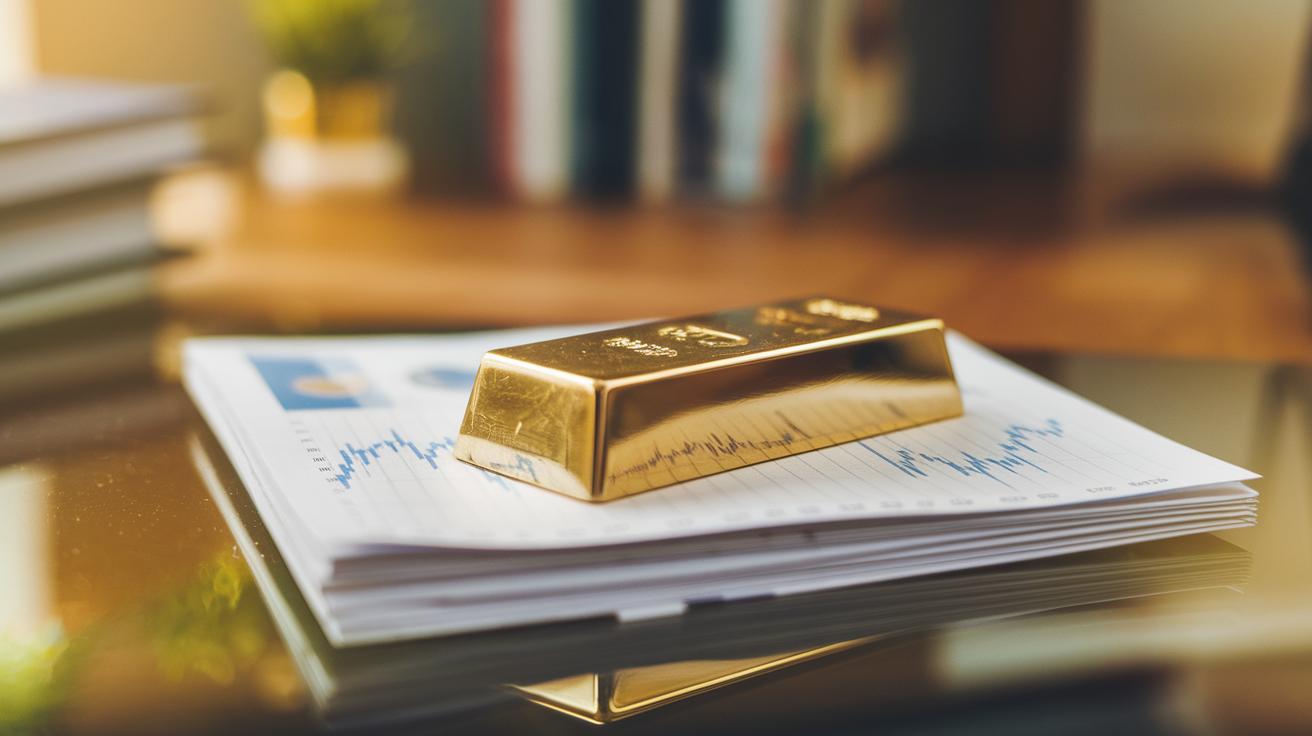
Gold's reputation as a safe-haven asset is primarily due to its ability to maintain or increase in value during times of economic uncertainty. When stocks, bonds, and real estate experience volatility or depreciation, gold often provides stability, serving as a reliable store of value. This characteristic makes gold an attractive option for investors aiming to protect their wealth against market downturns. The intrinsic value of gold, coupled with its limited supply and historical significance, contributes to its enduring appeal among investors seeking security.
- Risk Mitigation: Gold can reduce portfolio risk by balancing against potential losses in other asset classes.
- Inflation Hedge: Historically, gold has preserved purchasing power during periods of high inflation.
- Liquidity: Gold is easily convertible to cash, offering quick access to funds without significant loss of value.
- Global Demand: Continuous demand from central banks and consumers worldwide supports gold's long-term value.
- Diversification: Adding gold to an investment portfolio can reduce volatility and improve overall performance.
Incorporating gold into a diversified investment portfolio can enhance stability and resilience. While not typically chosen for rapid appreciation, gold's role as a risk mitigator is crucial. It acts as a buffer against economic shocks, ensuring that investors' portfolios are better equipped to withstand fluctuations. By including gold, investors can achieve a more balanced asset allocation, reducing dependency on any single market sector and safeguarding against unpredictable financial landscapes.
Comparing Gold Prices with Other Assets
Comparing gold prices with other assets is crucial for investors seeking to understand market dynamics and make informed decisions. Gold's unique role as both a commodity and a currency alternative provides a valuable benchmark for other investment opportunities. By analyzing relationships such as Dow to Gold, Gold to Oil, and Gold to Silver, investors can gauge the relative strength of gold compared to these assets. Notably, gold has been outperforming the S&P 500 on a one, two, and three-year basis, highlighting its resilience and appeal in diverse market conditions.
| Asset | Comparison Metric |
|---|---|
| Dow | Dow to Gold |
| Oil | Gold to Oil |
| Silver | Gold to Silver |
| Stock Market | Gold vs. S&P 500 |
These comparisons provide insight into the broader economic landscape. For instance, a high Dow to Gold ratio might indicate an overvalued stock market, prompting investors to consider gold as a safer alternative. Similarly, fluctuations in the Gold to Oil and Gold to Silver ratios can reflect shifts in commodity demand and industrial activity. Understanding these metrics allows investors to strategically allocate resources, optimizing their portfolios to balance risk and maximize returns in varying economic scenarios.
Final Words
Analyzing the gold price per ounce through various lenses reveals its significance in today's financial landscape.
The current gold price stands at $2,910.40 per ounce, reflecting real-time market dynamics.
Numerous factors, from economic shifts to geopolitical events, influence these fluctuations.
Historical data and future projections offer a roadmap for potential valuations, helping investors strategize effectively.
As a safe-haven asset, gold preserves value, providing stability and hedging against risk.
Comparative analysis with other assets highlights its robust performance, particularly over the S&P 500 in recent years.
Understanding these dynamics equips investors to make informed decisions in the gold market.
FAQ
Q: What is the current gold price per ounce?
A: As of March 7, 2025, the current price of gold is $2,910.40 per ounce. This price is updated hourly to reflect the latest market values, ensuring accurate and timely information for investors.
Q: How can I find today's silver price per ounce?
A: To find the current silver price per ounce, you can refer to financial news websites or dedicated market resources that regularly update precious metal prices, including live and historical data.
Q: What is the price of gold today?
A: To know today's gold price, check financial market websites or online metal trading platforms, which provide updated rates on an hourly basis to ensure you have the most current figures at your fingertips.
Q: How much is 24K gold per ounce?
A: The current value of 24K gold per ounce reflects market conditions, trading around $2,910.40 as of March 7, 2025. For the most recent figures, consult real-time market tracking sites.
Q: What is the highest gold price in history?
A: Historically, gold reached its nominal peak of approximately $2,075 per ounce in August 2020. However, inflation-adjusted prices provide deeper insights into long-term valuation trends.
Q: When was gold $20 an ounce?
A: Gold was priced at $20 an ounce in the early 20th century under the Gold Standard, up until the 1930s, highlighting the significant long-term appreciation of gold's value over the decades.
Q: How do geopolitical events affect gold prices?
A: Geopolitical events, including international tensions and policy decisions, can lead to fluctuations in gold prices. Such factors often increase demand for gold as a safe-haven asset during uncertain times.
Q: What are the benefits of investing in gold?
A: Benefits of investing in gold include portfolio diversification, protection against inflation, liquidity, long-term store of value, and serving as a hedge against economic downturns, contributing to overall portfolio resilience.
Q: How does gold compare with other assets?
A: Comparing gold with other assets reveals its strong performance against benchmarks like the S&P 500 over various periods, and its relationship with currencies and commodities like oil and silver offers strategic investment insights.


